A rental flat makeover starts with a familiar tension: you want a home that suits you, but the walls and floors belong to someone else. Still, it does not have to look temporary. The best rental interiors come from understanding how you live: where you drop your keys, how the daylight changes and which corners do not work. Good design improves your routine.
Start your makeover with how you live
Look at the flat as it is first, before you choose a paint colour or scroll through furniture. Measure every room, including radiators, doors, window openings and awkward alcoves. Notice the sightlines from the entrance and what you see when you sit down to rest. These details show where a room needs calm, storage, structure or a warmer welcome.
Next, decide which functions matter most. A compact studio may need to combine working from home, having guests and sleeping well in a small space. A larger rental may have plenty of square metres but lack coherence between rooms. In both cases the answer is not simply to add more. It is about giving each zone a clear purpose and leaving enough space to move comfortably between them.
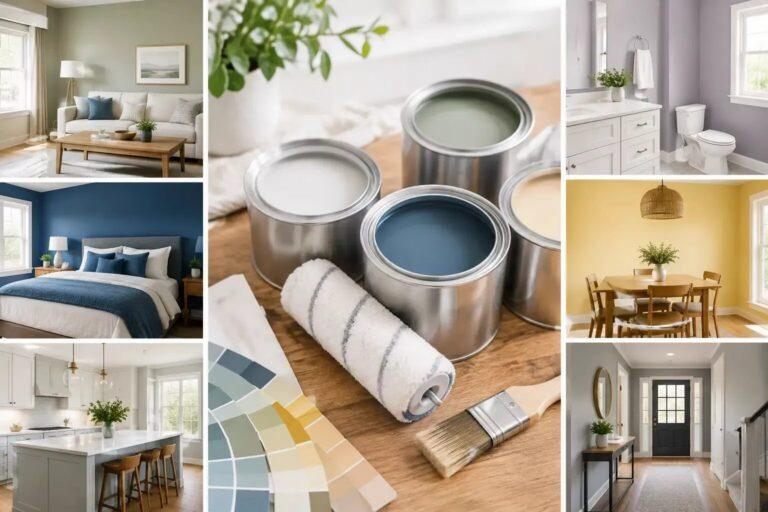
This is where a colour palette for the whole home comes in handy. Choose a small family of shades and materials that return in varying proportions throughout the flat. For example warm off-white on the walls, combined with oak, brushed metal, linen and one deep, grounding colour. Repetition creates continuity, while variation keeps the rooms from looking staged. And a chair, rug or lamp can simply move with you if your next home has a different layout.
Work with your tenancy agreement, not against it
A beautiful rental should never come at the cost of avoidable disputes. Read your tenancy agreement before you change anything permanent and ask for written permission where needed. Landlords are often open to painting, replacing light fittings or putting up shelves, especially when the proposal is well thought out, but assumptions can be costly.
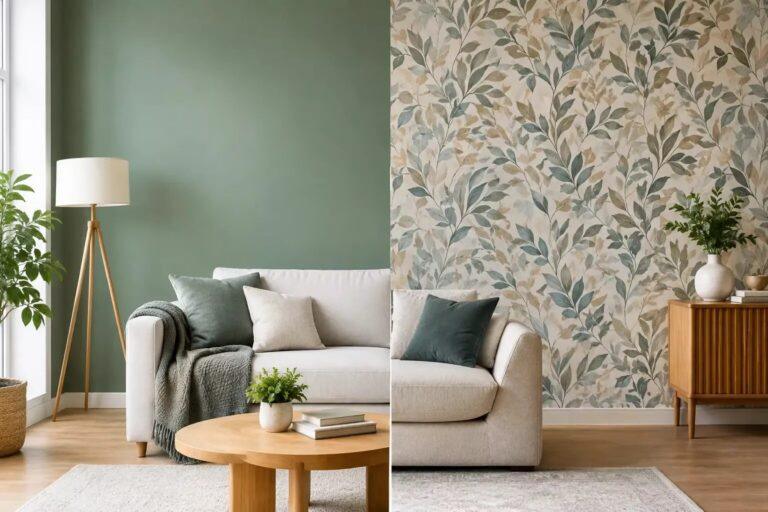
Think in three categories: changes that are fully movable, changes that are easy to reverse and changes that need approval. Furniture, curtains, freestanding storage and lighting belong to the first category. Removable wall treatments, temporary splashback films and carefully fitted picture hooks may fall under the second, depending on the surface and the agreement. New floors, built-in furniture and structural changes deserve a conversation with the landlord before you commit to anything.
Reversible does not mean you have to compromise on quality. A made-to-measure curtain on a discreet rail can soften awkward window proportions, improve privacy and add texture. A generous rug can define a seating area, dampen sound and let an unremarkable floor fade into the background. These are not temporary gestures. They are considered layers you can adjust, keep or take to your next home.
Create character with layers, not permanent changes
Rental flats often come with generic finishes: white walls, standard ceiling lights and a kitchen that is functional but emotionally anonymous. Instead of fighting every fixed element, create contrast around it. The room feels deliberate when the movable items share a clear visual language.
Start with the largest surfaces you control. Curtains should be generous enough to frame the window rather than just cover it. Rugs should be big enough for furniture to stand on properly, especially in the living room. A small rug that seems to float in the middle of the room can make even a well-furnished space feel fragmented. In the bedroom, a large rug under the lower two thirds of the bed adds warmth where bare feet touch the floor.
Lighting deserves special attention. The central ceiling light that comes with a flat rarely gives enough warmth or flexibility. Combine ambient lighting with task and accent lighting: a floor lamp next to the sofa, a table lamp on the sideboard, a reading light by the bed and a softer glow in the hallway. Choose bulbs with a warm colour temperature and use shades that diffuse the light rather than expose it. The atmosphere of a room often changes more through lighting than through a new coat of paint.
Art, mirrors and textiles form the final layer of personality. One substantial artwork creates more presence than a wall of unrelated prints. A mirror opposite the daylight can make a narrow room feel lighter, but it should reflect something worthwhile, not visual clutter. Cushions, throws and upholstery work best when they add texture and depth, not when they introduce every colour at once.
Make storage part of the composition
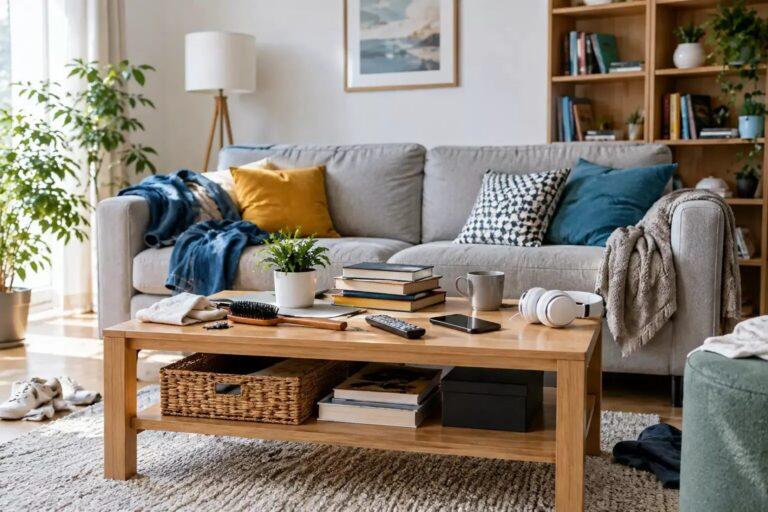
A rental flat makeover quickly loses its impact if everyday things have nowhere to go. Storage is not a separate practical problem to solve after furnishing. It is part of the visual calm of the interior.
Choose freestanding furniture with an eye for proportion and durability. A low sideboard can anchor a living area while holding cables, papers and crockery. A tall cabinet may make better use of vertical space in a narrow room, as long as it does not block the light or overpower the ceiling height. In the entrance, a slim console, wall hooks where permitted and a basket for everyday items can dramatically improve the first minutes of coming home.
Open shelves can be beautiful, but they require discipline. Use them for a limited selection of books, ceramics and objects with personal meaning, not to store everything that has no cupboard. Closed storage gives visual calm, especially in multifunctional rooms. The right balance depends on your habits: a collector may want space to show treasured pieces, while someone longing for calm may prefer quieter surfaces.
Give every room a focal point
In a rental, the existing architecture may not offer a natural centrepiece. A living room without a fireplace or an open space without clear boundaries can feel restless. The solution is often to create a visual centre of gravity through furniture placement, scale and colour.
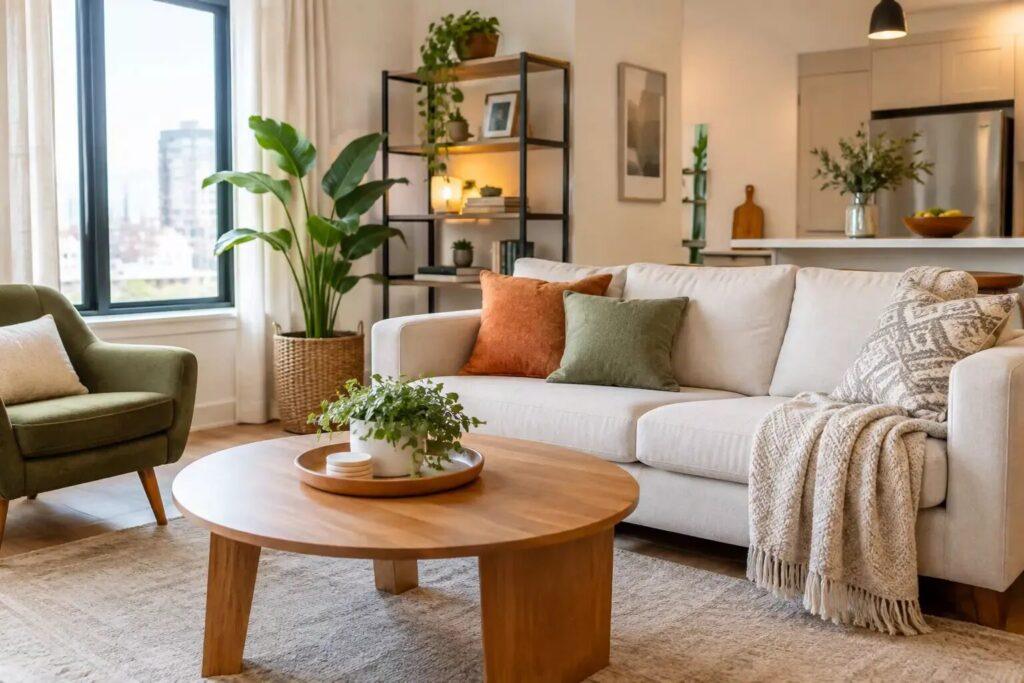
Group the seating around conversation rather than pushing every piece against the wall. Use a rug and a well-proportioned coffee table to hold the group together. If the dining area is part of the same room, give it its own character with a pendant light where permitted, a different textile finish or a statement table that earns its place. Zoning should guide the walking route without cutting the room into cramped pieces.
Bedrooms benefit from an equally considered focal point. An upholstered headboard, a painted panel approved by the landlord or a wall hanging gives the bed presence without permanent changes. Matching bedside lamps bring visual order, while a bench, chair or small rug makes the room less a place to sleep and more a private retreat.
Invest where you can take the value with you
Not every rental deserves a big financial outlay. If you are likely to move within a year, prioritise items that are movable, versatile and not tied to one layout. A good sofa, dining chairs, lamps, rugs and artworks usually travel well. Made-to-measure storage fitted exactly to one awkward alcove is only worth it if you expect to stay longer or can reuse it elsewhere.
It also helps to distinguish between what you see every day and what is merely trendy. A beautifully made chair in a fabric you really love lasts longer than a fleeting social media look. Timeless does not mean neutral or impersonal. It means choosing colour, form and material with enough conviction that they stay satisfying after the first excitement has faded.
For a more complex flat, a professional interior concept can prevent costly mistakes. NederVal Design & Comfort approaches rental spaces by listening first: routines, priorities and the character a client wants to bring home are mapped out clearly. The resulting plan makes the most of what is already there, points out the worthwhile investments and carries every decision through to the final styling details.
Your rental flat may not be a blank canvas in the legal sense, but it is the canvas for your life. Let the changes be considered, personal and useful. When the light is warm, the storage supports your routine and every chosen piece has a reason to be there, home feels less like a temporary address and more like a place that carries your story.